
Love can be...endless, a battlefield, people even save all of their love for one person.
Psychology touts it as a multidimentional emotion with layers of intimacy, commitment, and affection.
Beyond the basic Webster's definition of love and even Foreigner's wanting to know what love is,
let's start with why people thought there should be a day recognizing the importance of it.
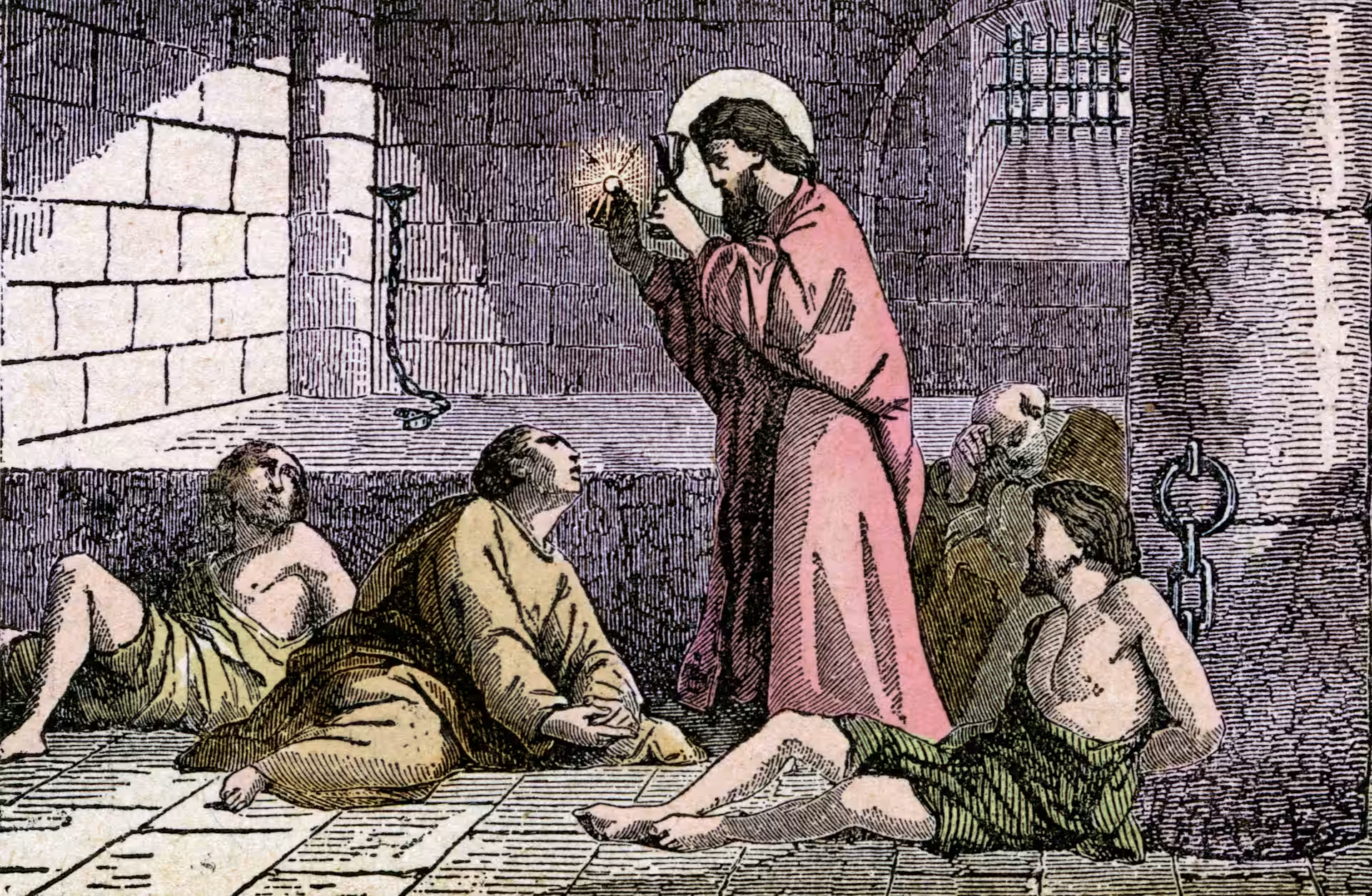
In Rome, there was once an Ancient fertility festival called Lupercalia in mid-February that was
intended to purify the city and encourage fertility. Our modern understanding of the origins come from St.
Valentine. In one iteration, the brave priest would marry couples in secret due to Emperor Claudius's decree
that the lack of marriage would make young men better soldiers. In theory, they would be more willing to go
to war and sacrifice their lives without the emotional attachment of a wife or child to come home to. In
another legend, St. Valentine sent a letter to his jailer's daughter signed,
From your Valentine
By the 1700-1800's it became customary to exchange various forms of affection; handmade tokens, jewelry,
personal letters, and notes.

Nothing says modern love like showing how much you love someone by the amount of money you spent on them.
By the 1840's, companies truly struck while the iron was hot, commodifying the idea of love with mass-producing
cards, jewelry, flowers, and chocolates expressing affection and advertising with newspapers, magazines,
radios, and television. Americans spent a record $27.5 billion on Valentine's Day, according to the
National Retail Federation. Based on data within the last 10 years, Valentine's Day actually ranks on the
lower end of the spectrum after the top six categories: winter holidays, back to college, back to school,
Father's Day, Mother's Day, and Easter.