Future Data
Model Data
Models
Models are future data compiled by many, many physics equations interacting with real-time data on supercomputers to spit out information on what they think is going to happen.
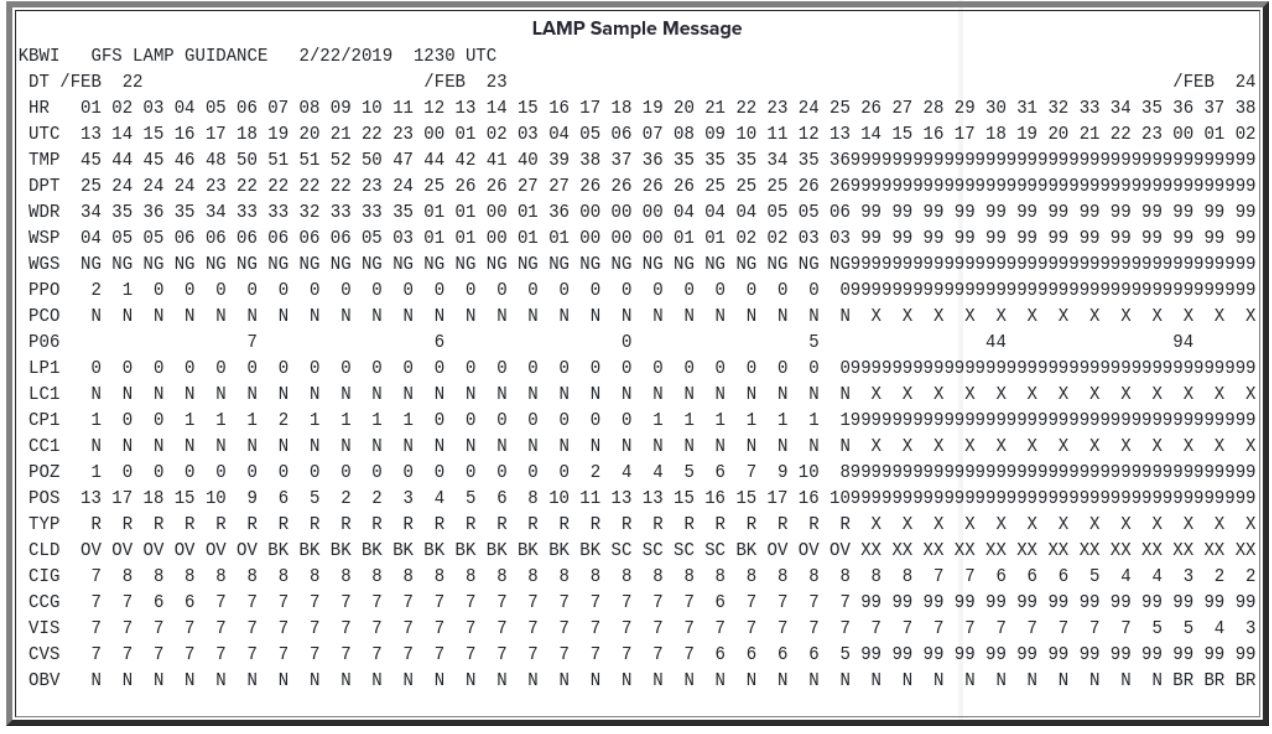
This is shown in two ways: deterministic models and stochastic (ensemble) models. Overall, deterministic models will give you a single value YES/NO to a weather phenomenon or an exact data point, whereas stochastic models will have a probability of those phenomena occurring. Think of it as deterministic: 2 inches of rain, stochastic: 70% chance of 2 inches of rain. These are commonly used together. Fig. 1 shows the GFS Lamp model and Fig. 2 explains how it’s using a blend of both.
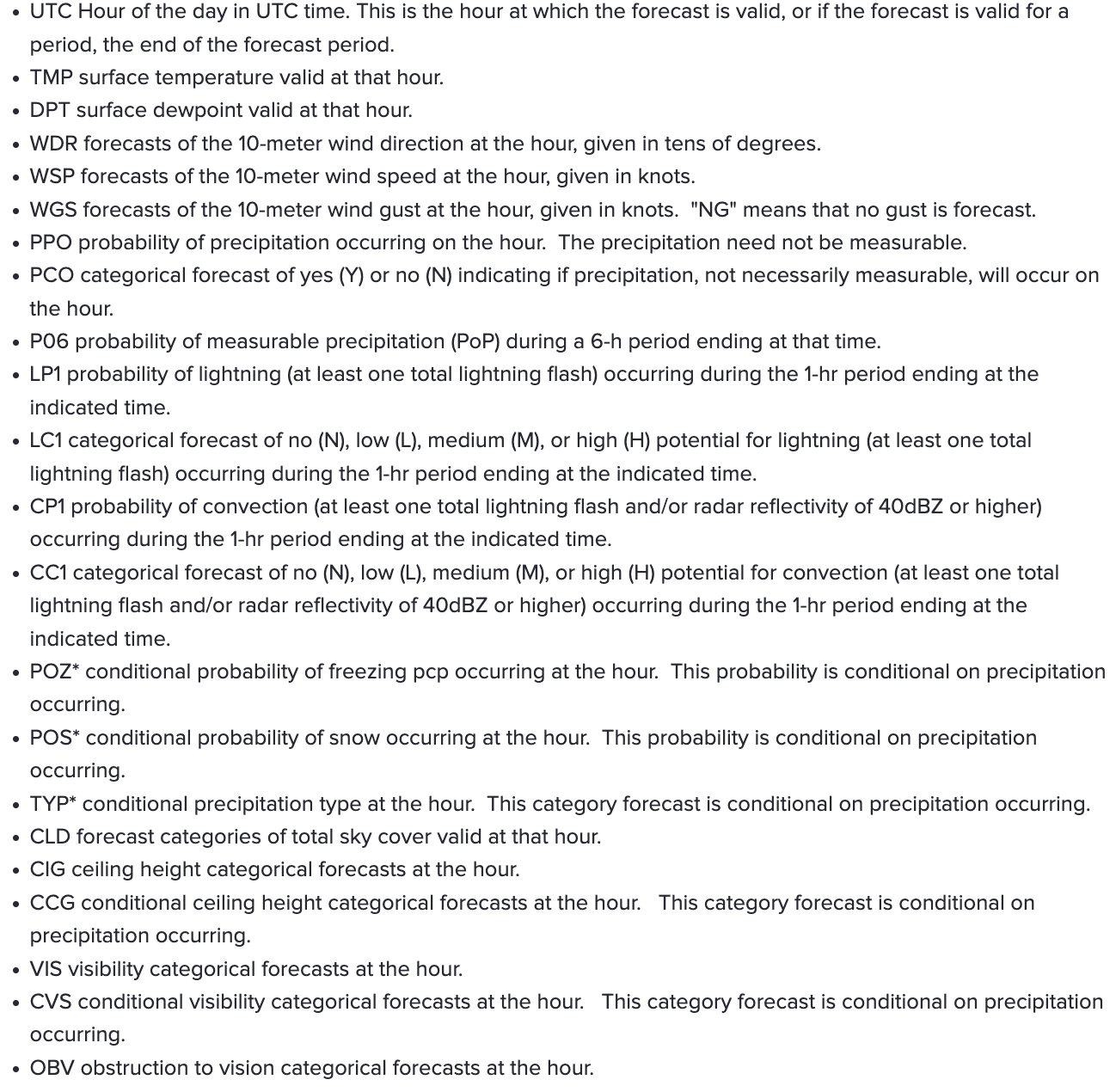
Here are the different visual loop models and how they help with various ranges of forecasting weather.
Short-range (forecasting a few hours to a day out)
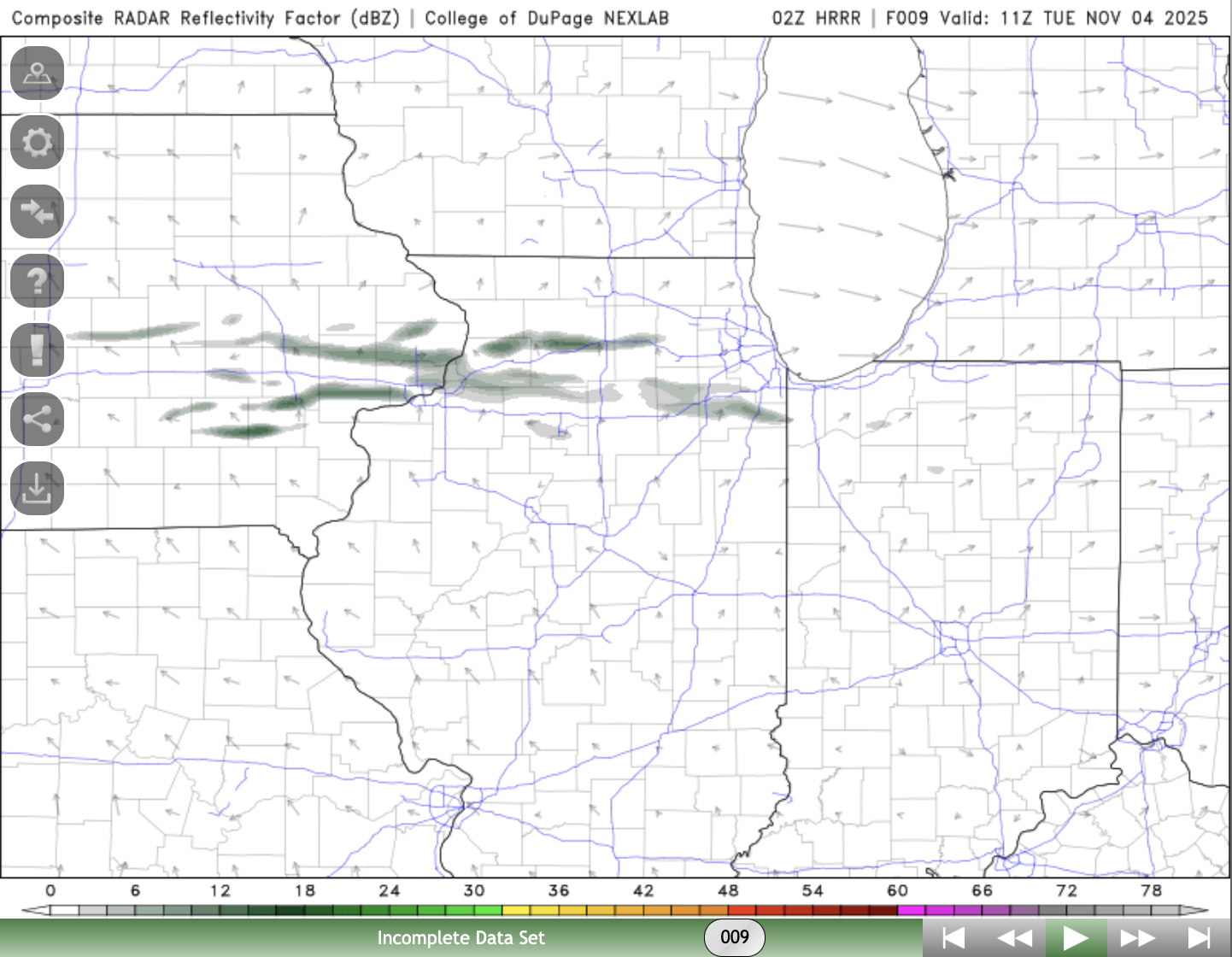
HREF – is a stochastic model standing for the High-Resolution Ensemble Forecast. Great for short-range forecasts in specific areas. This model changes frequently so it is important to check the most recent model for any drastic changes.
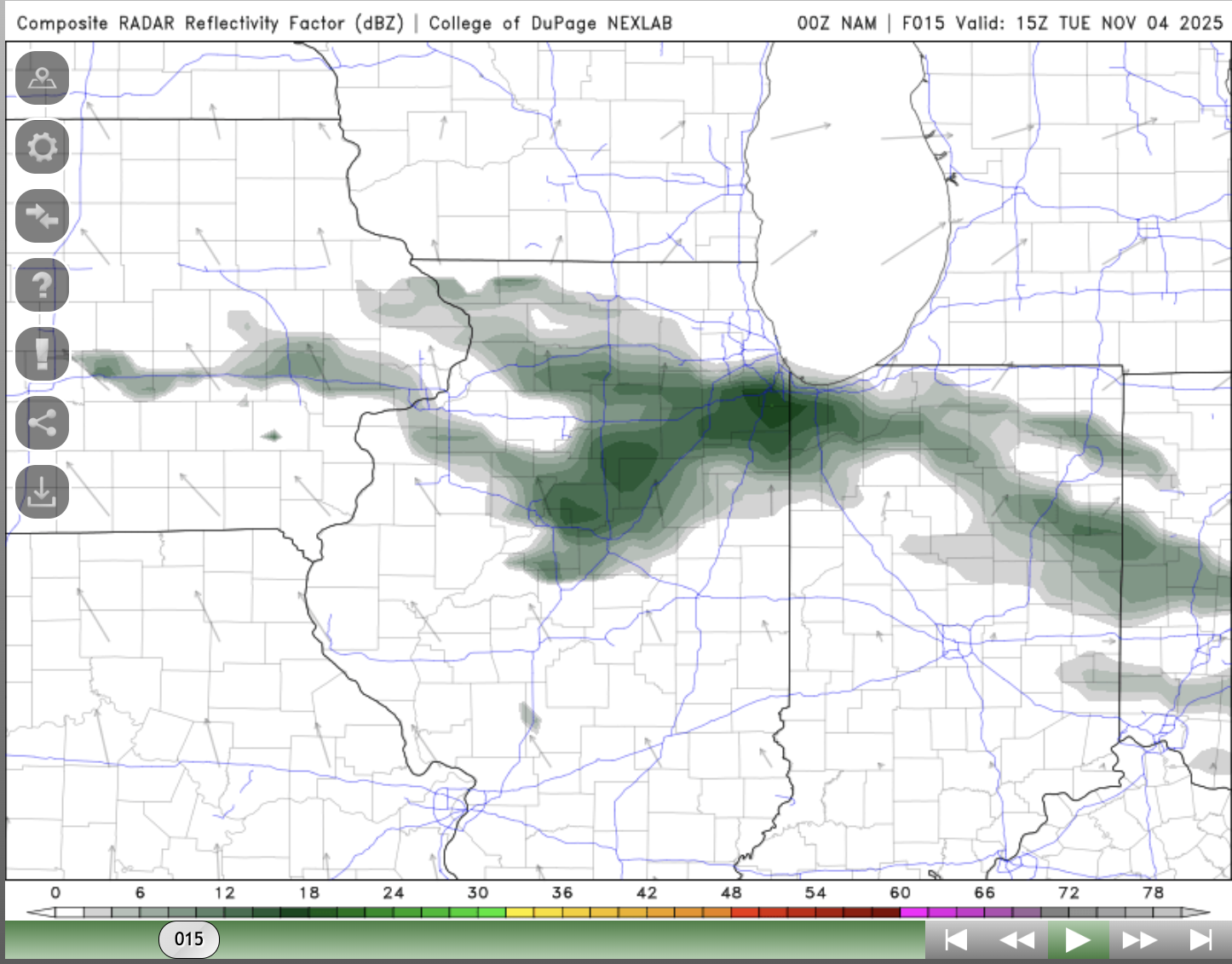
Medium-range (forecasting a day to a few days out)
NAM – is a deterministic regional model standing for the North American Mesoscale Forecast System offering a best-guess for producing a specific outcome. This model doesn’t change as frequently, and is often accurate, but it is important to check the most recent model for any changes.
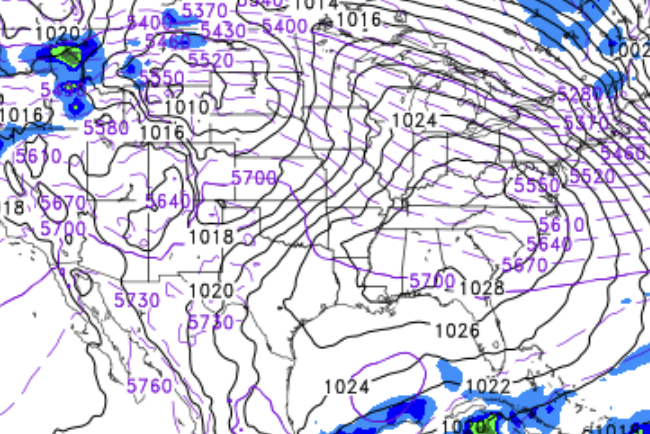
Long-range (forecasting more than a few days out to less than a week)
GFS – is a deterministic weather model standing for Global Forecast System. This helps with large areas covering longer periods of time. GFS is often criticized for being inaccurate the longer the period of forecasting goes, but it is the only model that goes out that far.
If you hear a weather forecaster heavily rely on models without giving much meteorological background on the type of systems causing the weather using real-time data, chances are they don’t really understand weather and heavily rely on the models to tell them what they should think. Models can accurate, but they can range from slightly inaccurate to completely inaccurate. Quite the spectrum. Typically, the further out the forecast the worse the models do in accurately predicting the weather. It is also important to initialize, meaning see how well the data forecasted on the models are accurate to what is showing with real-time data.